

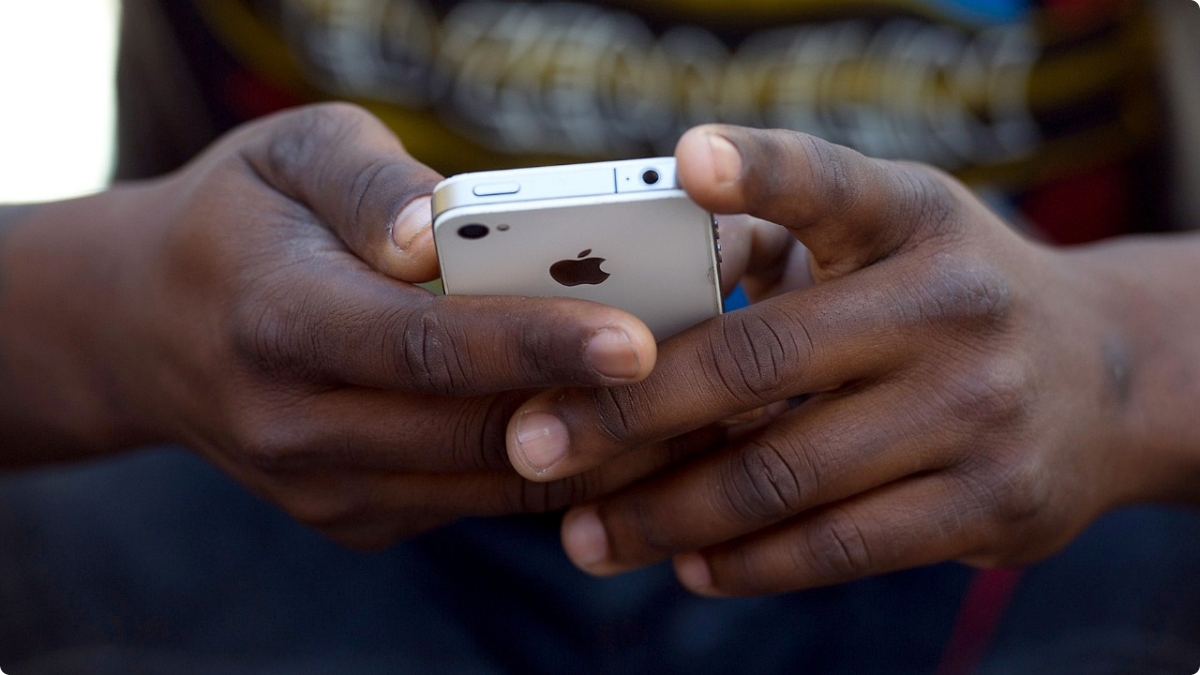

Our brains are adapting to touchscreen smartphone technology say researchers who have carried out a study on human volunteers.
The scientists used something called electroencephalography (EEG) to measure brain activity.
They found distinct differences between smartphone users and people who used ‘conventional’ cellphones.
Smartphone users had more attuned fingers and thumbs, based on their EEG readings.
Of the 37 volunteers, 26 were touchscreen smartphone users while 11 used ‘old-fashioned’ mobile phones.
EEG

The EEG readings looked at the electrical messages sent back and forth between the brain and the hands via nerves.
Multiple electrodes placed on the volunteer’s scalp recorded these exchanges about sensation.
From this, the researchers were able to build up a picture or map of how much brain tissue is devoted to a given body region.
The results revealed discernable differences between touchscreen smartphone users and people with conventional cellphones.
Smartphone users had bigger EEG brain activity measurements in response to mechanical touch on the thumb, index and middle fingers.
And this appeared to be linked to how often they used their touchscreens – the more frequent, the greater the EEG response.
The researchers say their findings, published in the journal Current Biology, make sense given that the brain is malleable and can be moulded by experience.
For example, in violinists, the brain area representing the fingers that play the instrument is larger than in non-musicians.
The researchers suspect the same is true with smartphones – repeated use sculpts the brain.
Study author Arko Ghosh, from the Institute of Neuroinformatics of the University of Zurich, said: “I was really surprised by the scale of the changes introduced by the use of smartphones.”
He said the discovery underlines how commonplace smartphones have become in our daily lives.
Source: BBC