

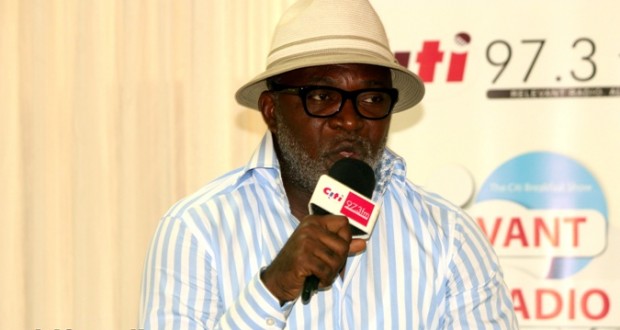

The Consumer Protection Agency (CPA) has filed a suit at the Supreme Court seeking a perpetual injunction to stop the Public Utilities Regulatory Commission (PURC), and service providers from implementing the newly announced hikes in electricity tariffs.
The Chief Executive Officer of the agency, Kofi Owusuhene, otherwise known as Kofi Capito, filed the suit on Friday December 11, with PURC as the first 1st defendant, the Volta River Authority (VRA) as 2nd defendant, Northern Electricity Development Company as 3rd defendant, the Ghana Grid Company Ltd as 4th defendant and the Electricity Company of Ghana (ECG) as the 5th defendant.
PURC last week approved a 59.2 and 67.2 percent increases in electricity and water tariffs respectively.
[contextly_sidebar id=”S3rX2E0AhNUJp69K7Lrg7f6Qh23PLK7C”]Some political parties, labour unions and civil society groups have described the increment as unfortunate and ill-timed considering that power supply in particular has been unstable for years.
The Consumer Protection Agency in its suit also argues that stakeholders in the power production and supply chain have failed to live up to expectations, hence their decision to stop the implementation which takes effect from Monday December 14, 2015.
The plaintiff in a statement of claim argued that “the power and authority of 1st Defendant (PURC) to approve electricity tariffs such as the 59.2% announced recently is discretionary pursuant to Article 296 of the 1992 Constitution which imposes a duty on it to be fair and candid.”
“Plaintiffs contend that it is unfair for 1st Defendant to approve a 59.2% increment in electricity tariffs at the time GoG, the sole owner of 2nd,3rd,4th and 5th Defendants is indebted to them as a result of inability to pay for electricity supplied to a number of Ministries, Departments and Agencies (MDAs) OF GoG.”
“Plaintiffs further contend that even though the discretionary power exercised by 1st Defendant in approving tariffs is subject to Article 296, 1st Defendant has never published or caused to be published by constitutional instrument or statutory instrument, regulations that underpin how it exercises discretionary power in approval tariff increases for electricity such as the recently announced 59.2% as required by Article 296(c) of the 1992 Constitution.”
“It is Plaintiffs’ case that what 1st Defendant has been doing for the benefit of 2nd, 3rd, 4th and 5th Defendants and particularly in relation to the 59.2% increase just announced is to rely on a so-called Rate Setting Guideline, a clear and patent illegality.”
The plaintiff thus concluded that the conduct of the PURC is “illegal and unless compelled by this Honourable Court Defendants would continue to overreach Plaintiffs.”
Against this backdrop, the plaintiff seeks the following reliefs of the court.
a.A declaration that the power 1st Defendant exercises pursuant to Section 3(a) of Act 538 to provide guidelines on rates chargeable for provision of utility services, which includes electricity tariffs is discretionary pursuant to Article 296 of the 1992 Constitution.
b.A declaration that the power 1st Defendant exercises pursuant to Section 3(b) of Act 538 to examine and approve rates chargeable for provision of utility services guidelines on rates chargeable for provision of utility services, including electricity tariffs is discretionary pursuant to Article 296 of the 1992 Constitution.
c.A declaration that 1st Defendant in announcing the 59.2% tariff increases for the benefit of 2nd, 3rd, 4th and 5th Defendants has not acted pursuant to any regulations provided for in any constitutional or statutory instrument as required by Article 296(c) of the 1992 Constitution.
d.A declaration that the Rate Setting Guideline relied on 1st Defendant to announce the 59.2% tariff increases for the benefit of 2nd, 3rd, 4th and 5th Defendants is not regulation(s) provided for in a constitutional instrument or statutory instrument.
e.A declaration that the decision of 1st Defendant to approve 59.2% increases in electricity tariff is unfair in the light of the persistent, irregular and unpredictable power outages perjoratively known as ‘Dumsor’.
f.An order setting aside the 59.2% tariff increases in electricity announced by 1st Defendant for the benefit of 2nd,3rd and 4th Defendants as being illegal and invalid.
g.An order of perpetual injunction restraining 1st Defendant, its officials, assigns, privies, servants, any person claiming under or through it and howsoever described from increasing utility tariffs without publishing regulations in a constitutional or statutory instrument as to the basis of the discretionary power as provided for by Article 296 of the 1992 Constitution.
h.An order of perpetual injunction restraining 2nd, 3rd, 4th and 5th Defendants, their officials, privies, servants, hirelings and underlings and/or any person claiming through them jointly and/or severally and howsoever described from charging electricity tariff increases on the basis of the 59.2% tariff increases announced by 1st Defendant with effect from Monday, the 14th day of December, 2015.
i. General damages
j. Costs
k. Any other relief(s) which this Honourable Court deems just and equitable.
The CPA’s court action follows a rejection of the new tariffs by organised labour which has demanded a reduction and a suspension of the implementation until 2016.
The Trades Union Congress has further demanded a fresh meeting with the PURC over the increases.
–
By: Ebenezer Afanyi Dadzie/citifmonline.com/Ghana