

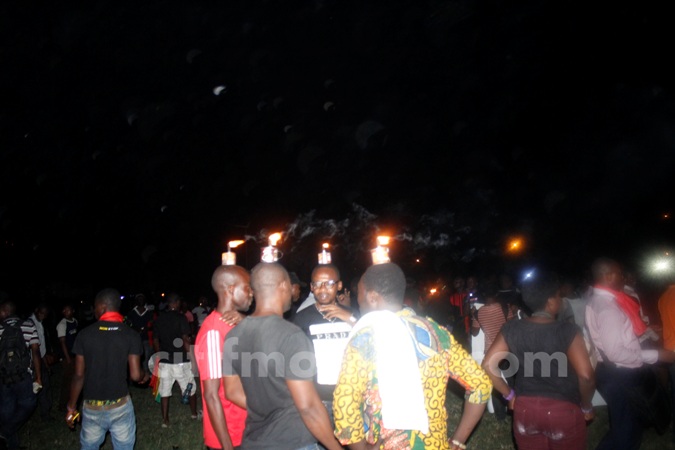

Oil workers in Nigeria on Thursday shut down official and business activities at the headquarters of the Nigerian National Petroleum Corporation (NNPC) in Abuja.
The workers are against the transfer of the operatorship of OML 42 from Shell to Neconde Energy Ltd. The strike action, coupled with other factors, have resulted in fuel shortage in Africa’s largest economy with it’s rippling effect hitting Ghana.

Ghana’s electricity generation is expected to be reduced by about 200 megawatts due to the current events in Nigeria. This is a blow to the sector which has seen some improvement in power generation over the past week.
Ghana’s peak load demand is 2100 megawatts. Due to inadequate generation, the power producers have been shedding about 600 megawatts resulting in acute power rationing, popularly called Dumsor.
[contextly_sidebar id=”0TXDJVI6s6yEpgK5zsJV5E3LRDdMUn9E”]The gas pressure from the West Africa Gas Pipeline Company (WapCo) has dropped to 18.83 bars. The drop is expected to continue as long as the strike action continues.
This trend is likely to result in the shutting of some of the units at Asogli, MRPP and CENIT if alternative sources of fuel are not found immediately. The three plants have an installed capacity of 200 megawatts, 80 megawatts and 130 megawatts respectively.
The proposed shut down of the plants would result in a loss of power generation, which would make the power rationing a bit more intensified as long as the strike action continues and gas supplies reduced.
On Thursday night, GRIDCO requested the ECG to shed 320 megawatt during the off-peak period between 08:00hrs – 18:00hrs on Friday.
Currently, the 33KV Weija 1&2 and Santamaria 2 feeders have been put off on emergency load shedding because GRIDCO requested for additional load of 180 megawatts to be shed due to low gas pressure.
Also, Oda and Asikuma have been taken off because the Akwatia Bulk Supply Point (BSP) has been taken down by Gridco. Areas under the Esiama BSP have also been taken off by GRIDCO.
Information available indicates that the Atuabo Gas plant, which is run by the Ghana Gas Company, is supplying around 70 million standard cubic feet of gas per day (mmscf/d) monthly average to VRA. This has resulted in the TAPco and TICO plants in Takoradi increasing generation to 280 and 200 megawatts respectively.
Ongoing maintenance works
Towns like Agona Swedru, Asafo, Nyakrom, Benso, Kwayanko, Abodom, Nsaba, Winneba, Apam, Dawurampong and surrounding areas were taken off the system due to planned maintenance work on the Winneba Bulk Supply Point (BSP).
On Saturday and Sunday, May 23 and 24, Cape Coast, Saltpond, Elmina, Abura Dunkwa, Assin Fosu, Twifo Praso and Ajumako will be taken off the national grid. This is to allow maintenance work at the Cape Coast BSP.
May power generation overview
Power generation has seen a steady improvement since May 1. In the first week of May, the amount of load shed averaged 512 megawatts. This resulted in Ghana purchasing about 150 megawatts from Cote D’Ivoire to shore up the system.

The average amount of load shed in the second week of May was 400 megawatts, a result of improved generation.
The off-peak load shedding averaged 320 megawatts in the third week, with a milestone generation of 1700 megawatts during the peak period on Tuesday, May 19.

Akosombo is currently running only four out of the six installed units and is producing about 500 megawatts of power a day. Akosombo requires careful management because Bui is drafting more upstream and the 6-10yr cyclical drought is affecting inflows into the Black and White Volta thus affecting the Akosombo dam reservoir level.
The Bui power plant manages to produce 220 megawatts during peak times. Analysts believe that Bui generating an average of 220 megawatts at peak is sustainable in the short term but above the projected average net generation capacity of of 980 GW h/yr (an average of 110 megawatts).
–
By: Kojo Akoto Boateng/citifmonline.com/Ghana