

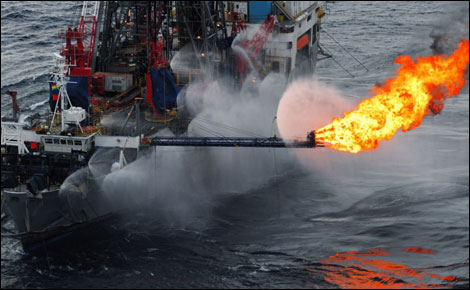

Some energy analysts have challenged the Environmental Protection Agency (EPA) to push for the passage of a law that demands companies in the extractive sector to make provision for environmental remediation products in case of accidents.
This follows the palpable failure of the current legal regime to effectively deal with challenges that have rocked the extractive sector in the past.
One example is the cyanide spillage caused by Goldfields Ghana Limited (GGL) on October 16, 2001, which drained into two rivers, polluting the source of drinking water for several communities.
The Wassa Association of Communities Affected by Mining (WACAM ); a local NGO led a campaign to compel the Ministry of the Environment to order the EPA and the Ghana Water Research Institute to conduct independent investigations into the accident.
Newmont Ghana Gold Limited (NGGL) paid GHC 7 million penalty for the negligent spillage.
Anide at its Ahafo Mine Project on October 8, 2009, 3.1 million cedis of the amount was to go to the affected communities.
According to the Executive Director of the Integrated Social Development Centre (ISODEC), Dr Steve Manteaw , Ghana as a state also lacks the “capacity” to deal with any major catastrophe , which makes the situation worse.
Ghana started drilling oil commercially from December 15, 2010 but some have questioned how robust the nation’s legal framework is to deal with any oil spillage.
Cabinet has approved the draft Petroleum Exploration and Production (E&P) Bill and is expected to soon go before Parliament for ratification.
This is after government withdrew the bill from parliament in 2010 after civil society protested that the bill had serious deficiencies.
In 2010, Kosmos Energy spilled 706 barrels of low toxicity substance at its drilling fields in West Cape Three Points .
A five-member ministerial committee recommended that the company pays a fine of US$35 million.
But Kosmos in response referred to the fine as baseless and unlawful because there was no law in Ghana books to necessitate the fine.
Kosmos Energy later while filing for the US Security and Exchange Commission (SEC) to sell 30,000,000 common shares, said “as part of such agreement and with respect to one particular issue, we agreed to pay GNPC $8 million upon signing the settlement agreement and $15 million upon the first to occur of certain liquidity events, including the successful completion of this offering”.
Kosmos Energy explained the details of these payments by stating, “these included disagreements over sharing information with prospective purchasers of our interests, pledging our interests to finance our development activities, potential liabilities arising from discharges of small quantities of drilling fluids into Ghanaian territorial waters, the failure to approve the proposed sale of our Ghanaian assets and assertions that could be read to give rise to taxes payable under the Ghanaian Tax Law in connection with this offering”.
Star Africa Commodities and Minerals Limited has been registered by the petroleum commission and the Enterprise Development Centre (EDC) to provide environmental remediation products
In an interview with Citi Business News, the Managing Director of the company , Chris Samson Andoh said authorities must ensure the local content law truly benefits indigenous Ghanaian companies.
He said Ghana must be proactive in dealing with the gaps in our legal regime considering the experience of Nigeria in Africa.
Star Africa Commodities and Minerals Limited has signed a 3-year partnership agreement with a UK company, Zwanny Limited to provide quality oil pollution and power generation products.
This comes after an earlier Memorandum of Understanding was signed in 2013 to provide the products for three African countries, including Ghana, Togo and Ivory Coast.
The new partnership agreement between Star Africa and Zwanny now covers all of the West African Countries including Mozambique.
Already, Ghana, Nigeria and Equatorial Guinea a have developed a joint effort to deal with any major Oil disaster.
But Dr. Steve Manteaw commending the efforts said it is not adequate yet to deal with emergencies.
By: Rabiu Alhassan/citifmonline.com/Ghana