

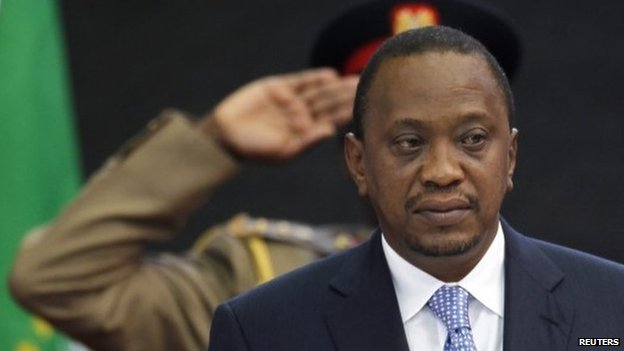

The International Criminal Court (ICC) has rejected a request by Kenyan President Uhuru Kenyatta to avoid appearing at a hearing on 8 October.
He denies organising ethnic massacres after the 2007 elections in which 1,200 people were killed,
Judges rejected Mr Kenyatta’s request to postpone the hearing or appear via video link, and insisted he must appear in person at the Hague.
The trial has already been delayed several times.
Mr Kenyatta’s lawyers made the request that he be excused from appearing before the court on the grounds that he had other commitments in Uganda at the same time.
They suggested that the hearing be postponed or that arrangements be made for Mr Kenyatta to appear via video link.
However, the ICC rejected the request, saying that the matters to be discussed were at a critical stage and directly involve the interest of the accused and victims.
“The chamber, by majority, finds that the requirements of justice in this case necessitate the physical presence of the accused in court,” the ICC said in a statement.
Violent dispute
Earlier in September, the ICC decided to postpone the start of Mr Kenyatta’s trial after prosecutors said the Kenyan government had failed to hand over crucial documents.
The hearing on 8 October will instead aim to set a date for a trial.
Mr Kenyatta’s lawyers have repeatedly said the whole case should be dropped because of a lack of evidence.


Mr Kenyatta was elected in 2013, despite facing the charges. Analysts said he turned the prosecution to his advantage, portraying it as foreign intervention in Kenya’s domestic affairs.
In 2007, Mr Kenyatta was a close ally of President Mwai Kibaki, who was declared the winner in that year’s election despite claims of fraud from his rival Raila Odinga.
The disputes soon turned violent, with targeted killings along ethnic lines, pitting members of the Kikuyu ethnic group of Mr Kenyatta and Mr Kibaki against other communities.
Mr Kenyatta is accused of organising an ethnic Kikuyu gang, the Mungiki sect, to attack rival groups.
His Vice-President, William Ruto, faces similar charges, although he was on Mr Odinga’s side during the violence.
Source: BBC