

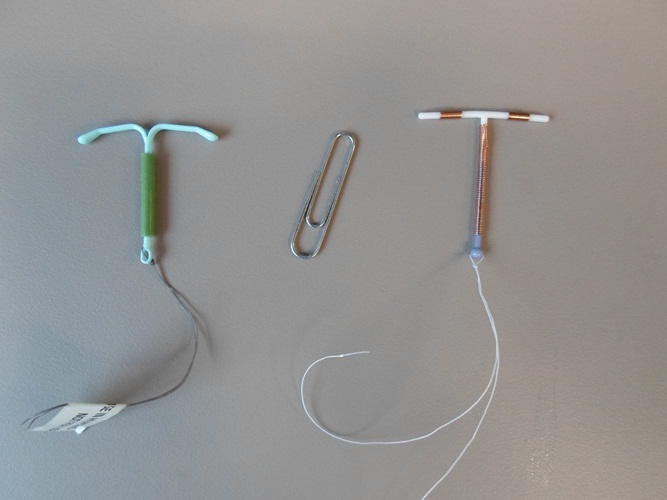

Majority of teenagers use condoms as their primary method of birth control, but long-acting contraceptives such as intrauterine devices should be the “first-line” of contraceptives in preventing teen pregnancy, according to new recommendations from the American Academy of Pediatrics.
For the first time, the organization recommends that pediatricians must discuss long-acting reversible contraceptives before other birth control methods for teens, citing the “efficacy, safety and ease of use” of long-acting reversible contraception, such as IUDs and progestin implants.
In the guidelines published Monday in the journal Pediatrics, the AAP also recommends that pediatricians must encourage condom use, which reduces the risk of sexually-transmitted diseases, for every sexual act.
The last set of recommendations from the AAP came in 2007. The new guidelines, taken as a set of best practices for pediatricians to consider adopting, follow other groups suggesting similar counseling for teens.
In 2012, the American College of Obstetricians and Gynecologists suggested that doctors should encourage teens to use long-acting contraceptives, or LARC methods.
Mary A. Ott, who helped write the AAP guidelines, said in an interview that major organizations and agencies are increasingly suggesting long-acting contraceptives for teens, partially due to a “decade of data suggesting that LARC [methods] are safe in teenagers and they are the most effective tools we have to prevent pregnancy.”
IUDs are small, T-shaped devices that, once inserted into the uterus by a doctor, can prevent pregnancy for up to 10 years with a failure rate of about 0.8 percent, according to the Centers for Disease Control and Prevention.
Implants, thin rods inserted under the skin on the upper arm, release progestin and last for about three years, with a failure rate of 0.05 percent.
Birth control pills have a failure rate of 9 percent, and male condoms have an 18 percent failure rate, according to the CDC.
Condoms remain the most popular form of birth control for teenagers; 52 percent of female teens said condoms were used the last time they had sex, while about 31 percent said they used birth control pills.
Twelve percent said they used other hormonal methods, and 20 percent used condoms and a hormonal method, according to a 2006-2010 Health and Human Services survey.
Just 4.5 percent of female teens use long-acting devices, according to the American College of Obstetricians and Gynecologists.
High condom use is partly due to cost and the ease of access (teens don’t need to see a doctor to get a condom, for example).
Indeed, cost and access to health-care providers can make it more challenging for teens to be able to use LARC methods, said Ott, the doctor who helped write the AAP guidelines. For instance, IUDs can cost anywhere from $500 to $1,000 up front, according to Planned Parenthood.
LARC methods can be more cost-effective over time, Ott said. She pointed to a project in St. Louis, where teens were more likely to choose long-acting methods once cost and access weren’t issues.
But misconceptions can also discourage LARC use by teenagers. The ACOG wrote that doctors’ concerns about long-acting contraceptives serve as barriers to access.
“Families and young people are concerned about safety and these are medical devices and medications, so they have side effects,” Ott said. “But I always remind families when I’m counseling them that all methods of contraceptives are safer than pregnancy.”
Source: washingtonpost.com