

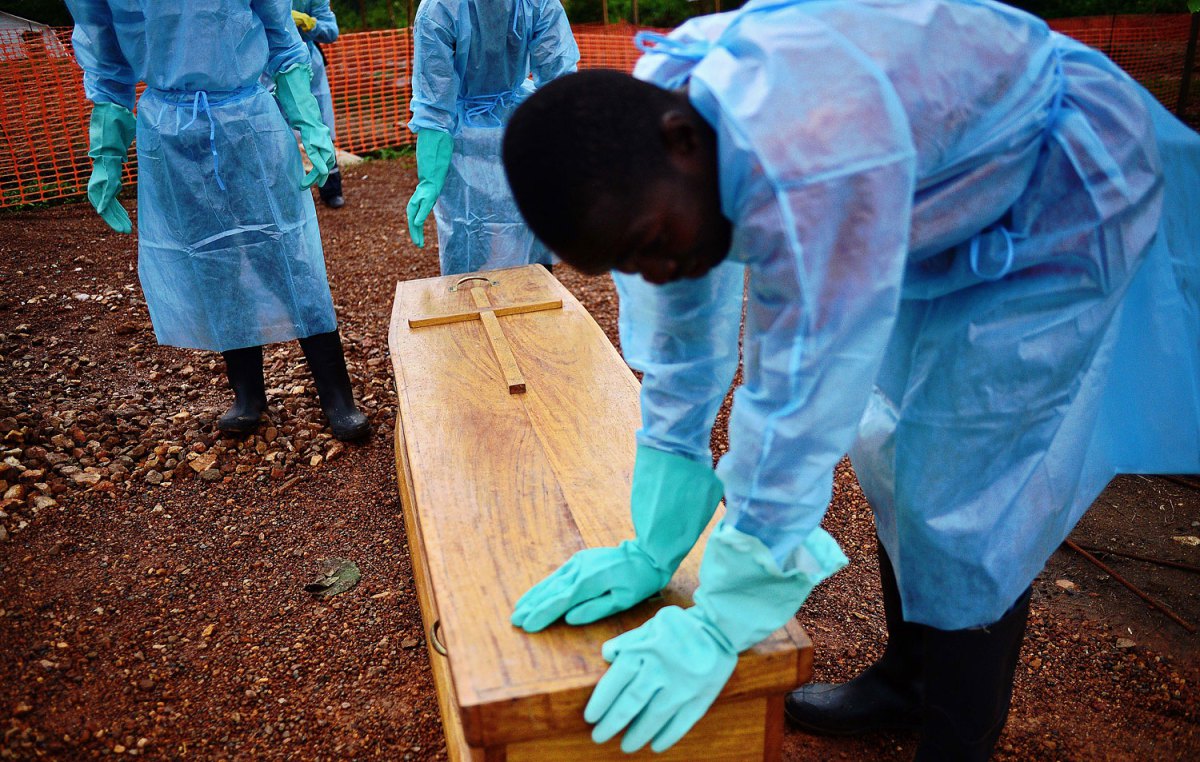

Sierra Leone – one of the countries worst hit by West Africa’s Ebola outbreak – has announced a four-day lockdown to try to tackle the disease.
From 18 to 21 September people will not be allowed to leave their homes, a senior official said.
The aim of the move is to allow health workers to isolate new cases to prevent the disease from spreading further.
The outbreak has killed about 2,100 people in Sierra Leone, Liberia, Guinea and Nigeria in recent months.
The World Health Organization (WHO) announced on Friday that health workers could be given vaccines as from November, when safety tests are completed.
More than 20 health workers have lost their lives to the virus in Sierra Leone since the start of the outbreak in March.
Last month Liberia sealed off a large slum in the capital, Monrovia, for more than a week in an attempt to contain the virus.
The disease infects humans through close contact with infected animals, including chimpanzees, fruit bats and forest antelope.
It then spreads between humans by direct contact with infected blood, bodily fluids or organs, or indirectly through contact with contaminated environments.
Even though the country’s security forces have already been deployed to quarantine certain areas, it remains unclear how such a countrywide lockdown can be enforced, the BBC’s West Africa correspondent Thomas Fessy reports from Senegal.
The population’s willingness to obey will be key for it to succeed – a forcible implementation is likely to raise human rights issues and could potentially spark violent demonstrations, our correspondent adds.
A presidential adviser described the measure as aggressive but argued that it was necessary to deal with the spread of Ebola.
Meanwhile, officials in Nigeria have decided to reopen schools in the country from 22 September.
They were closed as a precaution to prevent the spread of the virus.
On Friday, the WHO announced that the blood of patients who recovered from Ebola should be used to treat others.
People produce antibodies in the blood in an attempt to fight off an Ebola infection. The antibodies may be able to help a sick patient’s immune system if they are transferred.
However, large scale data on the effectiveness of the therapy is lacking.
Source: BBC