

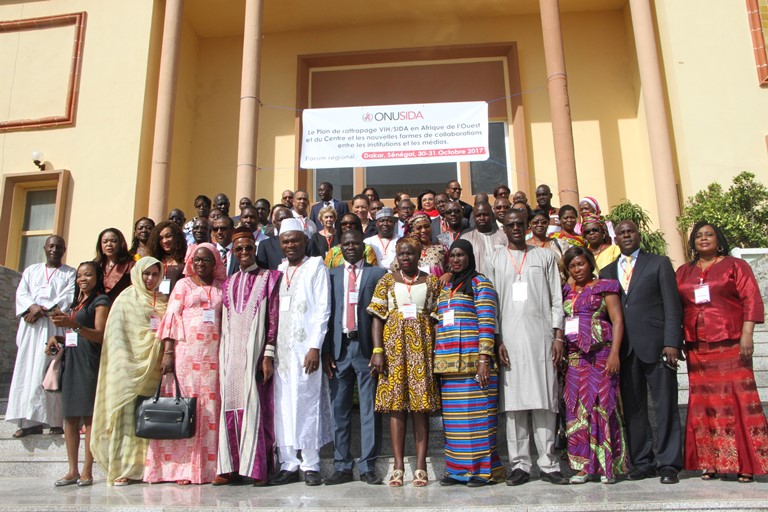
About thirty (30) Journalists from twenty-five (25) countries from West and Central Africa, where 4.7 million people living with HIV are not receiving treatment, have undergone a capacity training workshop, on a new HIV Catch-Up Plan for the region.
Dubbed “Informing the Messengers”, the regional workshop organized by the Joint United Nations Programme on HIV/AIDS (UNAIDS), saw the selected journalists enlightened on the new emergency plan that seeks to accelerate the HIV response in Central and West Africa.
According to UNAIDS, at time when the global response to HIV is accelerating, millions of people in Western and Central Africa are being left behind, hence the need for an urgent response that supports countries in a trajectory to meet the global target to end AIDS.
Figures from the global body show that while the world witnessed significant progress, with 57% of all people living with HIV knowing their HIV status, 46% of all people living with HIV accessing treatment and 38% of all people living with HIV experiencing viral load suppression in 2015, countries in West and Central Africa achieved only 36%, 28% and 12%, respectively, in the same period.
It is estimated that in the 25 countries of West and Central Africa, 6.5 million people were living with HIV at the end of 2015, including 500 000 children. The region accounted for 18% of the global HIV burden, despite having only 6% of the global population.
West and Central Africa has an HIV treatment gap of 4.7 million people. Only 1.8 million people living with HIV were on antiretroviral therapy at the end of 2015. This sharply contrasts with figures from Eastern and Southern Africa, which had a treatment coverage of 54% in 2015.
Again, while nine in 10 pregnant women have access to treatment in Eastern and Southern Africa, only five women in 10 do in West and Central Africa, despite there being fewer people living with HIV in the region.
The HIV Catch-Up Plan which is linked to the Sustainable Development Goals (SDGS), is a political instrument and a compact between countries and the international community that supports countries’ strategies and plans to quickly address bottlenecks.
It is to supplement national strategies and existing plans with the aim of increasing antiretroviral treatment uptake and saving lives. It also aims to put an additional 1.2 million people living with HIV in Central and West Africa, under treatment by the end of 2018.
The new catch-up plan was adopted by the Heads of State and Governments at the 29th African Union Summit in Addis Ababa.
The two-day workshop in Dakar, Senegal, had representatives from the African-American and African Diaspora Press in the USA, and high level UNAIDS officials, including some UNAIDS Country Directors.
Journalists were taken through interactive presentations and open discussions on the need to scale up the response to HIV in the region
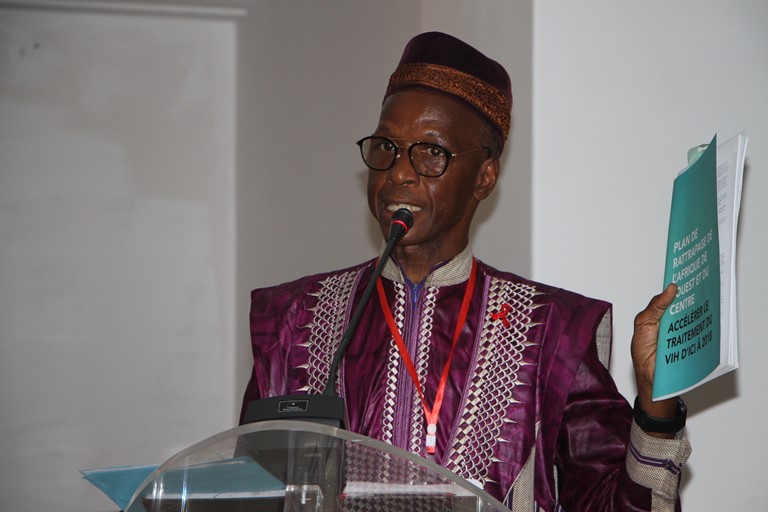
Speaking at the event, the Regional Director of UNAIDS for Western and Central Africa, Dr. Djibrill Diallo, said the workshop was to brief media practitioners on the current situation of HIV and AIDS in the region, and also to offer them the platform to network, and better inform the public on this new catch-up plan, which is an essential step towards reaching the global target of ending the AIDS epidemic by 2030.
“This workshop highlights the importance UNAIDS gives to the communication dimension of all its actions and initiatives”.
He said communication is one of the 4 pillars of the Catch-up Plan alongside political mobilisation, fund raising and the programmatic dimension, stressing that UNAIDS is convinced that the media will play a fundamental role for the success of the Catch-Up Plan.
The Senior Advisor to the Executive Director of UNAIDS, was optimistic that through the reports, inquiries and opinion pieces by journalists, the region can raise awareness among the populations of the region to change their behaviours and foster a positive dynamic to put an end to AIDS by 2030.
He noted that as part of the plan, a total of US$ 20 million has been reprogrammed in existing Global Fund grants to cover antiretroviral therapy needs. He said new funding from PEPFAR has also been negotiated by countries.
It is estimated that with this plan, at least 850 000 people, including 60 000 children, diagnosed as living with HIV but not yet enrolled in care will receive sustained high-quality antiretroviral therapy by mid-2018.
The plan also hopes to ensure that an additional 250 000 people living with HIV, including 60 000 children, who have been newly tested, know their HIV-positive status and are linked to sustained high quality antiretroviral therapy by mid-2018.
Ten countries in West and Central Africa have already developed and implemented their catch-up plan. These plans were developed by the local national AIDS commissions and approved by the highest political authorities.
–
By: Attah- Effah Badu/Daily Express Newspaper