

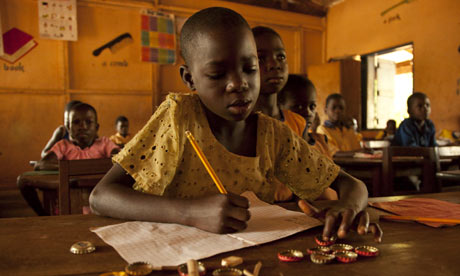

Fifty years ago, the United Nations Educational, Scientific and Cultural Organization (UNESCO) declared 8th September ‘International Literacy Day’ with the goal “to actively mobilize the international community and to promote literacy as an instrument to empower individuals, communities, and societies.”
In 1991, the Non Formal Education Division (NFED) of the Ministry of Education was established with the mandate to eradicate illiteracy in Ghana by the year 2015.
After almost a quarter of a century, the NFED has been utterly unable to craft a coherent national policy to guide achievement of this goal.
NFED has failed
As Ghana joins the world to celebrate this all important day which is under the theme: “Literacy and sustainable development,” I dare say that NFED’s failure to achieve the objectives for which it was established is completely unacceptable.
Despite the fact that Ghana’s literacy levels continue to be disputed by researchers (who consider government statistics to be inflated and exaggerated, containing a sizeable number of functional illiterates), one thing is certainly clear: Ghana’s literacy rate continues to fall way below the global average level of 84 percent.
Teaching approach
Certainly, change won’t be easy. There is no simple solution. But clear guidance must be given. For example, our country’s traditional process of learning is currently embroiled in critical dispute among many researchers, some of whom have made a strong case for young learners first having a firm grasp of their mother tongue before learning a second language.
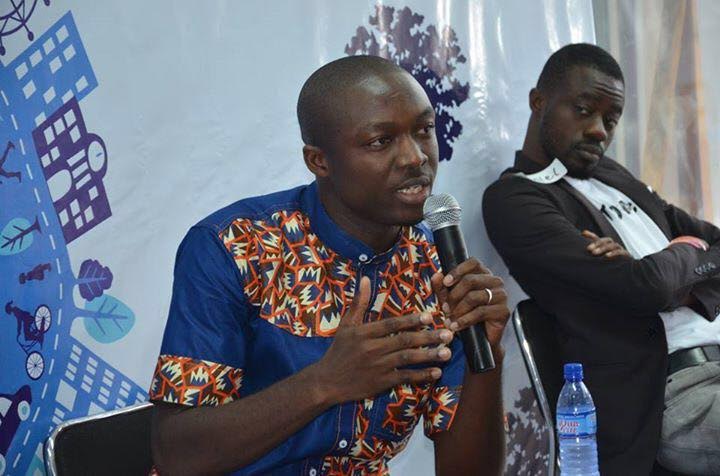
Personally, I believe that ignoring the demonstrated merits of this approach may be negatively affecting many children and their learning development process. Furthermore, inconsistencies and rapid changes in language policy in Ghana have also left key players within the education sector drifting, with no clear direction.
We stand at a crossroad.
Agenda 2030
In fact, 2016 is the first year of implementation of the 2030 Agenda for Sustainable Development. In this context, the vision of literacy according to UNESCO is aligned with lifelong learning opportunities with special focus on youth and adults.
Literacy is a part of Sustainable Development Goal 4, which aims to “ensure inclusive and equitable quality education and promotes lifelong learning opportunities for all.”
There are many citizens out there who are doing the little they can to help reduce the illiteracy rate in the country to its barest minimum. On my part, I’ve been running Street Library Ghana which has been operating literacy intervention programmes for children and young adults in Ghana over the past five years.
Key innovations from the stables of Street Library Ghana include a Digital Mobile Library on Wheels that brings critical learning resources, including books and computers, to rural children. This programme is generously supported by Tigo Ghana and the Millicom Foundation and has over the last one year benefited 20,000 children in rural communities in the country.
Our newest innovation transforms student classrooms into “living libraries,” allowing young readers to freely and voluntarily have access to high interest, culturally appropriate books right in their own classrooms. This initiative is wholly funded by The Chen Yet-Sen Family Foundation and the Global Fund for Children.
Our libraries and reading hubs in Pokuase, in the Greater Accra Region, and Damang Ahwerase, in the Eastern Region, will host dozens of eager young readers, sharing stories, games, and other learning activities as the nation marks World Literacy Day. We will be engaging children in various Reading, Literacy, and Personal Development Activities to commemorate the day.
Share your vision on combating illiteracy
As Ghana goes to the polls in December, it is highly unfortunate that none of the presidential candidates have come out strongly to share their vision of how they will eradicate illiteracy and build the capacity of our most important resource – our people.
Our educational system is in dire need of some serious repair. The rural communities I have visited with my digital mobile library are highly disadvantaged.
Street Library Ghana is my practical contribution; what is theirs?
–
By: Hayford Siaw
The writer is a Social Entrepreneur – Founder and President: Street Library