

The Institute of Fiscal Studies (IFS), is against proposals for the State funding of political parties, saying the country’s economy is not strong enough to shoulder the burden of funding the over-20 recognized parties.
The Governance Unit of the Institute of Economic Affairs (IEA), had proposed the earmarking of two and a half percent of national revenue for supporting political parties.
[contextly_sidebar id=”fl2kW8Ao2yJirB7qZ0YGm92oFwBXsLc6″]But Speaking to Citi News, the Resident Economist at the IFS, Dr. Adu Owusu Sarkodie, said government is already too occupied with critical financial commitments.
“Already, we are overburdened with some revenue earmarking; the National health Insurance levy, Energy levy, District Assembly’s common fund, road fund, GET fund etc.”
Dr. Sarkodie advised political parties to be more resourceful in the raising of campaign funds instead of looking up to the state to fund their activities.
“The alternative here can be to look for donor support. Another way is to encourage political parties to undertake investment ventures. For example, the ANC [African National Congress] in South Africa, they have a mining company.”
Arguments for state funding of parties
The most recent comments on political party funding came from the Majority Leader in Parliament, Alban Bagbin, who rekindled the debate about the need for the state to sponsor political parties.
He sided with proponents of political party funding who believe the smaller political parties are struggling to contribute their quota effectively to multi-party democracy.
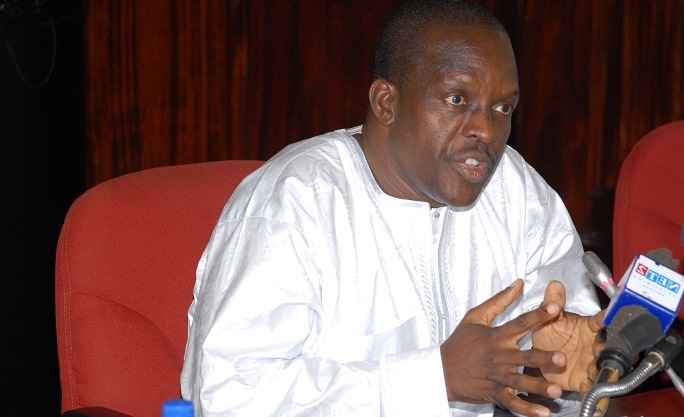
Mr. Bagbin argued that, once the country had taken the path of multi-party democracy, the state ought to play a part in the development of political parties mainly because several of them are not as strong as the incumbent National Democratic Congress (NDC) and the opposition New Patriotic Party (NPP).
He also noted that political parties struggle to survive because Ghanaians generally view political parties as private enterprises.
Public Funding of Political Parties’ Bill
There is a bill covering the funding of political parties, the Public Funding of Political Parties’ Bill, which was laid before the presidency in 2010, but has since not been forwarded to parliament.
It is hoped that if passed, the Draft Bill of 2008 would help minimise drastically the unhealthy competition during the electioneering
Some critics have cited the stalled consideration of the bill as indicative of the unwillingness of African governments to ensure a level playing field for the opposition, in terms of electoral competition.
Since the Political Parties’ Act of 2000 banned parties from seeking foreign funds to run their activities, membership dues paid to parties have accounted for only two per cent of the cost of running their activities.
–
By: Delali Adogla-Bessa/citifmonline.com/Ghana