

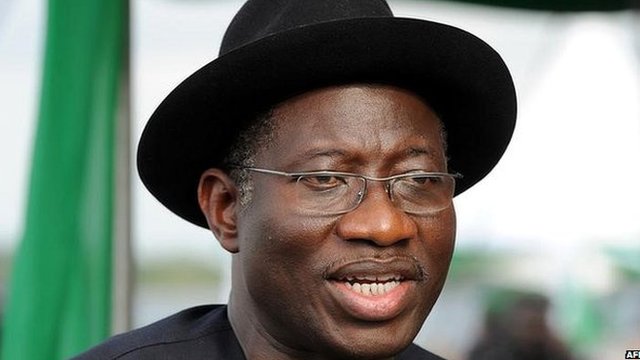

Nigeria’s President Goodluck Jonathan is expected to visit the north-eastern town where more than 200 schoolgirls were abducted, officials have said.
Nothing was seen of the girls for almost a month after they were taken from Chibok by Boko Haram militants.
But on Monday the group released a video showing more than 100 of them and offering an exchange for prisoners.
The president has come under pressure over his government’s failure to rescue the girls, but has ruled out a swap.
On Thursday, relatives of the girls called for their unconditional release.
But the UK’s Africa Minister Mark Simmonds said Mr Jonathan had “made it very clear that there will be no negotiation” at a meeting on Wednesday.

President Jonathan’s visit to Chibok has not been officially confirmed but sources in the presidency told the BBC he would visit the town to assess the situation in Chibok and meet parents of the schoolgirls and other key officials.
He has been criticised for not visiting the town until now – more than a month after the girls were seized.
The president will then travel to Paris to take part in a summit convened by French President Francois Hollande to discuss Boko Haram.
The leaders of Nigeria’s neighbours – Benin, Cameroon, Niger and Chad – are scheduled to attend the summit on Saturday, which will also include representatives from the UK, US and EU.
A statement said delegates at the meeting will “discuss fresh strategies for dealing with the security threat posed by Boko Haram and other terrorist groups in west and Central Africa”.
‘Troubling atrocities’Meanwhile, US officials on Thursday criticised the speed of Nigeria’s response to the threat from Boko Haram.
Alice Friend, director for African affairs at the US defence department, said its security forces had been “slow to adapt with new strategies and new tactics”.

“We cannot ignore that Nigeria can be an extremely challenging partner to work with,” Ms Friend said.
State of emergencyUS drones and surveillance aircraft have been deployed to assist in the search for the schoolgirls, while the UK has sent a military team to the capital, Abuja, to work alongside US, French and Israeli experts.
The lower house of Nigeria’s parliament, the House of Representatives, approved an extension of the state of emergency in the north-east states of Yobe, Borno and Adamawa on Thursday.

President Jonathan had requested a six-month extension, calling the security situation in the region “daunting” and saying he was concerned by the mounting loss of life among civilians.
The state of emergency, which still needs to be approved by the Senate, gives the military widespread powers such as detaining suspects, imposing curfews and setting up roadblocks.
On Thursday, there have been reports of fresh attacks by suspected Boko Haram militants in Borno state.
A witness told the BBC’s Hausa Service that there had been explosions in Gamboru Ngala, were some 300 people were killed last week in a massacre blamed on Boko Haram.

Nigeria’s President Goodluck Jonathan is expected to visit the north-eastern town where more than 200 schoolgirls were abducted, officials have said.
Nothing was seen of the girls for almost a month after they were taken from Chibok by Boko Haram militants.
But on Monday the group released a video showing more than 100 of them and offering an exchange for prisoners.
The president has come under pressure over his government’s failure to rescue the girls, but has ruled out a swap.
On Thursday, relatives of the girls called for their unconditional release.
But the UK’s Africa Minister Mark Simmonds said Mr Jonathan had “made it very clear that there will be no negotiation” at a meeting on Wednesday.
President Jonathan’s visit to Chibok has not been officially confirmed but sources in the presidency told the BBC he would visit the town to assess the situation in Chibok and meet parents of the schoolgirls and other key officials.
He has been criticised for not visiting the town until now – more than a month after the girls were seized.
The president will then travel to Paris to take part in a summit convened by French President Francois Hollande to discuss Boko Haram.
The leaders of Nigeria’s neighbours – Benin, Cameroon, Niger and Chad – are scheduled to attend the summit on Saturday, which will also include representatives from the UK, US and EU.
A statement said delegates at the meeting will “discuss fresh strategies for dealing with the security threat posed by Boko Haram and other terrorist groups in west and Central Africa”.
‘Troubling atrocities’Meanwhile, US officials on Thursday criticised the speed of Nigeria’s response to the threat from Boko Haram.
Alice Friend, director for African affairs at the US defence department, said its security forces had been “slow to adapt with new strategies and new tactics”.
“We cannot ignore that Nigeria can be an extremely challenging partner to work with,” Ms Friend said.
State of emergencyUS drones and surveillance aircraft have been deployed to assist in the search for the schoolgirls, while the UK has sent a military team to the capital, Abuja, to work alongside US, French and Israeli experts.
The lower house of Nigeria’s parliament, the House of Representatives, approved an extension of the state of emergency in the north-east states of Yobe, Borno and Adamawa on Thursday.
President Jonathan had requested a six-month extension, calling the security situation in the region “daunting” and saying he was concerned by the mounting loss of life among civilians.
The state of emergency, which still needs to be approved by the Senate, gives the military widespread powers such as detaining suspects, imposing curfews and setting up roadblocks.
On Thursday, there have been reports of fresh attacks by suspected Boko Haram militants in Borno state.
A witness told the BBC’s Hausa Service that there had been explosions in Gamboru Ngala, were some 300 people were killed last week in a massacre blamed on Boko Haram.