

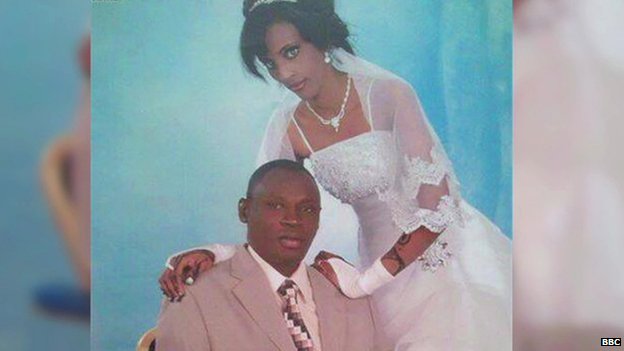

A court ruling in Sudan sentencing a heavily pregnant woman to death has reignited debate about punishment for apostasy.
Dr Meriam Yahya Ibrahim was condemned to hang for allegedly leaving Islam and marrying a Christian man.
The court said that by doing so, she had abandoned her religious faith and was guilty of apostasy, which carries the ultimate penalty under Islamic law in the country.
But some liberal religious scholars have argued apostasy is not even a crime.
They back up their beliefs by citing the Koranic verse which states: “There shall be no compulsion in religion.”
Other more conservative Muslims refer to the words of the Prophet Muhammad in the Hadith saying: “It is not permissible to spill the blood of a Muslim except in three [instances]: A life for a life; a married person who commits adultery; and one who forsakes his religion and separates from the community.”
Day of judgement
Islam’s legal system – Sharia – says apostasy covers a wide range of offences, including conversion to another religion, idol worship, or mistreating the Koran.
While some scholars favour the death penalty, others say the punishment should be left to God on the day of judgement.
The late Ayatollah Khomeini, Iran’s religious and political leader, famously denounced the author Salman Rushdie as an apostate for his novel The Satanic Verses – and said he should be killed.
Saudi Arabia, Pakistan and Afghanistan also uphold strict interpretations.’
In 2006, an Afghan, Abdul Rahman, who announced his conversion to Christianity escaped a death sentence and was offered asylum in Italy.
Another Afghan citizen was granted asylum in the UK earlier this year after persuading the courts he faced the death penalty at home because he was an atheist.
Meanwhile, non-Muslims such as the Bahai community have faced difficulties in countries including Egypt.
‘Abhorrent’
Human rights groups have condemned Islamic laws on apostasy.
Amnesty International has described the latest case in Sudan as “abhorrent”.
“The fact that a woman could be sentenced to death for her religious choice … should never be even considered,” it said.
When she was convicted on Sunday, Dr Ibrahim – who is said to be eight months pregnant – was given three days by the court to return to Islam.
But she again affirmed her Christian faith, and her lawyer says she will appeal against the sentence.
For now, her fate hangs in the balance.
And the debate over apostasy – and whether she committed a crime in the first place – goes on.
Source: BBC