

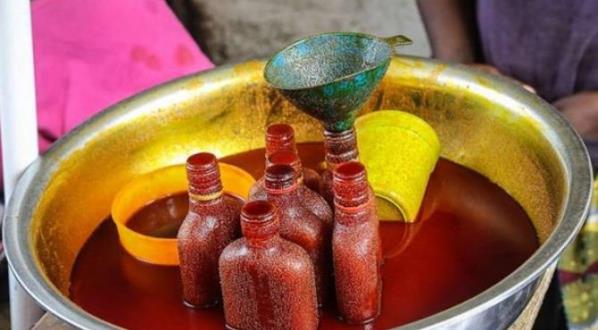

The Food and Drugs Authority (FDA), after series of interventions, has declared palm oil safe for consumption but advised consumers to only patronize palm oil from sellers with accredited badges from the Authority.
The FDA in collaboration with Women in Agricultural Development Directorate, market queens and the Ghana Oil Palm Producers Association, educated palm oil producers, transporters and sellers on the health risks and criminal nature of the use of Sudan IV dyes, after the seizure of drums of adulterated palm oil containing Sudan IV Dye.
[contextly_sidebar id=”D1mny2ACW7WCNuTbFMDUZeuFw1Bd9wOe”]Briefing the media in Accra, Mr John Odame Darkwa, the Deputy Chief Executive Officer of FDA in charge of Food said, over 500 palm oil sellers from Agbogbloshie, Ordorna, Madina and Makola markets have been registered and provided with tags to identify them.
He said the tags bear the names and picture of the seller, serial number and the market he or she is selling from.
This information together with the supplier or distributor and national identification number of the seller have been captured in a data base to help facilitate traceability of any adulterated palm oil found on the market.
“Each seller is therefore to wear the tag as an indication of self-compliance in the sale of non-adulterated palm oil. The registration is on-going and will be extended to the other regions next year,” he added.
He urged buyers to confidently patronize palm oil from sellers who display these tags during this Christmas season and assured Ghanaians of their safety and good health.
The FDA in October this year confiscated large quantities of adulterated palm oil from 10 major markets in Accra and Tema.
The products, which were being sold at the Mallam Atta, Dome, Dansoman, Agbogbloshie and Kaneshie markets, all in Accra, were said to have been adulterated with Sudan IV, an industrial dye used in the colouration of plastics and other synthetic products to enhance its red colour and make it more appealing to consumers.
Large quantities of the oil were also seized at the Madina, Makola No 2, Tema Community One and Ashaiman markets.
Laboratory analyses conducted on samples of the adulterated oil showed active dye popularly known as sudee substance of about 98 per cent, a carcinogenic agent when mixed with food.
Mr Odame Darkwa said that the Public Health Act 851 of 2012, Section 12 prohibited the adulteration of food items and that a person who sold such adulterated food, or used such a chemical in a food item committed an offence under the act.
He cautioned processors, wholesalers, distributors and retailers that adulteration was a prohibited act, as spelt out in Section 100 of the Public Health Act, 2012, Act 851, and would implement it to the latter.
–
Source: GNA