

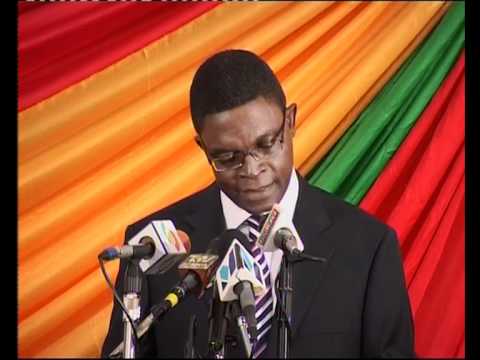

The Institute of Democratic Governance (IDEG) has renewed calls for state financing of political parties to help reduce corruption in Ghana.
Under Ghanaian law, “only a citizen may contribute in cash or in kind to the funds of a political party”.
Section 24 of the Political Parties Act says, “A non-citizen shall not directly or indirectly make a contribution or donation or loan whether in cash or in kind to the funds held by or for the benefit of a political party and no political party or person acting for or on behalf of a political party shall demand or accept a contribution donation or loan from a non-citizen”.
But, damning reports have over the years revealed that the nation’s political parties have been breaking law by secretly receiving campaign funds from non-citizens, creating fertile grounds for non-accountability and for corruption to thrive.
Although the state has for years provided some semblance of support for the nation’s political parties in the form of campaign vehicles, analysts have repeatedly described such interventions as paltry.
IDEG believes the state can deal roundly with the problem of corruption within political parties and in the country in general by providing public funds to finance the activities of political parties.
According to IDEG’s Executive Director, there are unanswered questions about how opposition parties, which struggle financially to contest elections, suddenly get rich shortly after forming a government.
Speaking on Thursday’s edition of the Citi Breakfast Show, Dr Emmanuel Akwetey posed a rhetorical question: “Don’t we find it interesting to ask how come when our parties are in opposition they are poor but as soon as they come into government they’re rich. How can this work and how can we deal with this, and how can we also finance the parties so that we can then see how to reduce the risk?”
He went on, “When you’ve accumulated so much debt financing yourself while you were in opposition and so on, is that free money? When you come into power how do you pay?”
According to Dr. Akwetey, financing the political parties can help in monitoring their expenses whether in opposition in power.
In June 2012, Dr Kwadwo Afari Gyan, Chairman of the Electoral Commission (EC), said the commitment of governments was necessary to give practical effect to proposals for state funding of political parties.
Dr. Gyan said political parties only stated their interest and commitment to state funding of their activities when in opposition but forgot about the subject once in power.
By: Martin Asiedu-Dartey/citifmonline.com/Ghana