

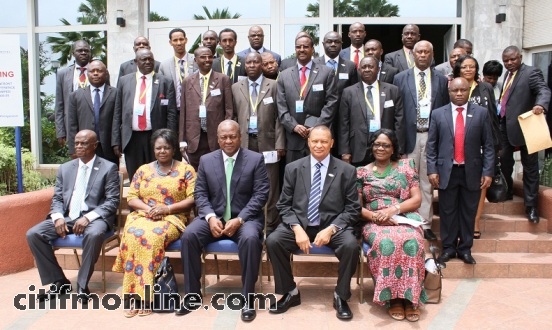

The United Kingdom’s Department for International Development (DFID) says it will continue to support Ghana to fight corruption and strengthen state institutions.

Under the leadership of President John Mahama and with financial and technical support from the DFID an initiative was developed to restructure Government for greater efficiency.

Ghana’s cabinet secretariat, as part of this programme, which is designed to complement existing interventions in policy and delivery—and not to replace them—was tasked with the strengthening of the processes of policymaking and the tracking of the implementation of policy decisions reached by cabinet.

Delivering a presentation on how the service delivery model can assist in the tracking of cabinet decisions, an advisor on reform, change and delivery at the National School of Government International (NSGI-UK) stressed the DFID’s commitment to providing more support to Ghana’s cabinet so far it will yield the needed measurable results.

He further advised the presidency to “ensure that using the service delivery” clear cut goals “which will make the needed impact are set” for the various sectors to “ensure sustainable development”.
For his part the secretary to Cabinet Roger Angsomwine praised the DFID for the project and stated that “Ghana has attained a lot of benefits from it”.

Mr. Angsomwine also hinted that “Ghana has lined up a lot measures to ensure the cabinet structure strengthened and also the entire governance machine is improved”.

Successes of the programme
The successful implementation of the first phase of the programme involved the wage bill verification which led to the immediate removal of over 2000 “ghost names” from the government pay roll, and a cabinet set of decisions to deal with the canker.

There has also been enhanced coordination among the three key offices within the presidency–cabinet secretariat, Presidents secretariat and Policy Unit.
The programme also assisted in the E-cabinet processes through the digitization of cabinet memos since 1992 and built the capacity of staff of the cabinet office on writing improved cabinet memos.

The programme also led to the redesign of the national results matrix at the National Development Planning Commission (NDPC).

New focus of the programme
The strengthening cabinet programme will now move into a new focus involving three key areas.
- The implementation of a series of diagnostic and capacity-building processes to strengthen the cabinet secretariat to vet and assist line ministries to produce better memos and streamline the effective tracking of the implementation of cabinet.
- Facilitate the establishment and operation of a pilot private office at the Ministry of health to assist the minister to produce top of the range memos for cabinet.
- Exemplify the tracking of the implementation of Cabinet/Executive decisions by tracking the decision to improve healthcare outcomes especially for maternal and child health, through functional community-based health planning and Services(CHPS)
By: Raymond Acquah/citifmonline.com/Ghana